

Menopause loneliness affects far more women than most people realize — and its impact goes beyond emotions.
Menopause can bring emotional and physical isolation. Learn how natural movement, sunlight, and the right supplements can help restore vitality.
There’s a silence that sometimes comes with menopause — not the absence of noise, but of connection. Many women, even surrounded by family, describe a loneliness they didn’t expect. As hormones shift, so does energy, mood, and identity.
But this season can also be a quiet invitation. A turning inward that opens space to reclaim what makes you feel alive.
Women experiencing menopause loneliness often describe a quiet loss of energy and connection — a feeling that settles into the body before it appears in the mind.
“Menopause doesn’t take your light — it reveals the places where you forgot to shine.”
How Menopause Loneliness Affects Energy and Vitality.
Fatigue, joint discomfort, mood swings — they’re often blamed on aging, but are deeply intertwined with emotional health. The weight of loneliness can settle in the body. Moving less, isolating more, and feeling less seen, all affect how joints feel and how energy flows.
Many women are surprised by how menopause loneliness shows up — not always as sadness, but as a quiet distance from their own energy. It’s the feeling of being present for everyone yet somehow disconnected from the spark that once came so easily. This isn’t a failure or a personal flaw. It’s a biological and emotional transition happening at the same time.
Hormonal shifts influence the nervous system, sleep, inflammation, and even how we process connection. When estrogen drops, the brain becomes more sensitive to stress and less able to filter emotional weight. That’s why simple moments can feel heavier, and why the world feels a little farther away.
“I didn’t realize how much I missed myself until one morning I felt a small calm inside my chest again. It wasn’t joy, exactly — just the sense that I was coming back.”
— Marianne, 53
What often goes unnoticed is how this quiet loneliness affects movement. When you feel withdrawn, the body moves less. When you move less, joints stiffen, circulation slows, and energy naturally drops. A loop forms: low vitality reinforces isolation, and isolation reinforces low vitality.
But this loop can be interrupted gently — with attention, kindness, and small rituals that reignite inner warmth.
Women who reintroduce simple habits often describe a surprising return of lightness. Not suddenly, but steadily: clearer mornings, softer moods, less tension, more curiosity about the day. These shifts matter. They restore connection — not just with others, but with the parts of you that menopause never took away.
Your energy isn’t gone. It’s waiting for a path back to you.
Light, Movement, and Natural Support.
Simple rituals can change everything:
– Walks in morning sunlight
– Gentle stretching with music
– Time outdoors, even on a balcony
– Speaking kindly to your body
These acts aren’t just symbolic — they trigger hormonal balance, circulation, and emotional release.
A Formula That Supports More Than Just Joints.
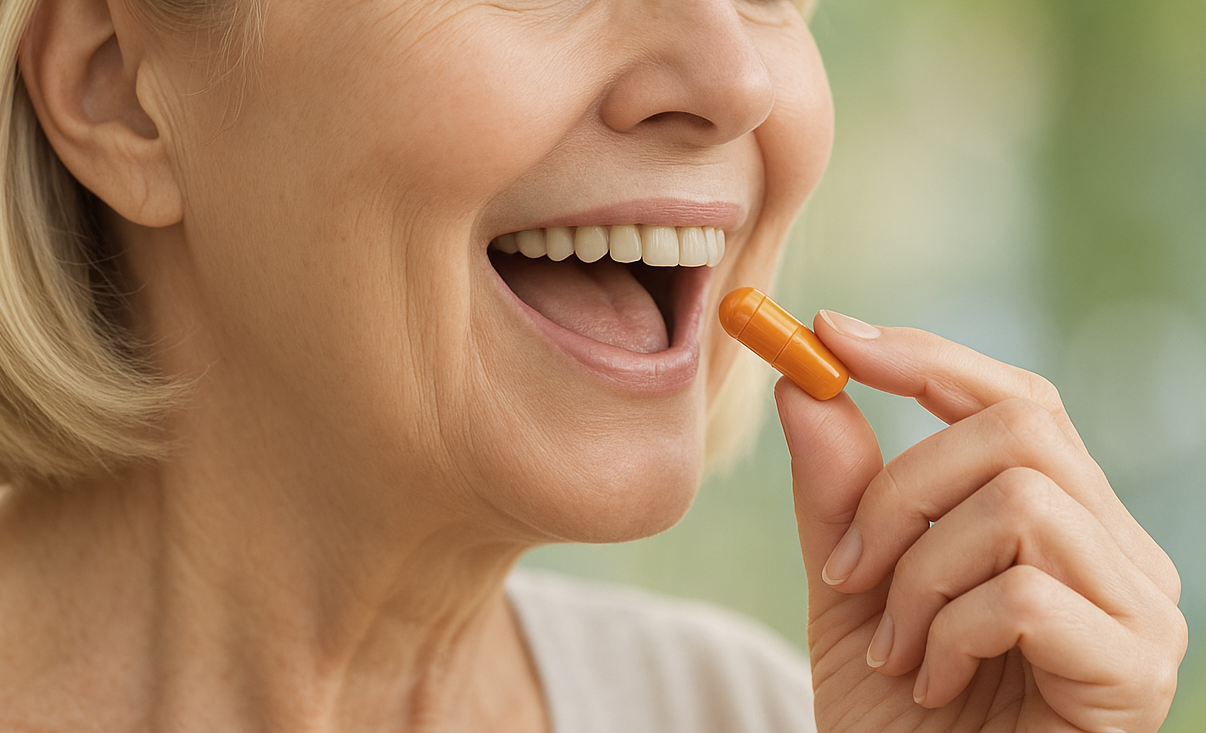
Joint Genesis™ was developed not just for mobility, but for women in transition. Its natural ingredients like resveratrol, ginger, and hyaluronic acid help reduce inflammation, ease stiffness, and support overall vitality. It’s about feeling capable again — and not doing it alone.
Your Energy is Still Yours.
You don’t need to return to who you were. You’re being called into someone wiser, still luminous. Movement is one part. Nourishment is another. And the willingness to care, again — even if gently, even if slowly.
Even small steps matter.
Explore Harvard Health’s insights on menopause and joint health
Updated regularly to reflect scientific advances in women’s joint care.